Labels

Friday, 9 November 2018

The 'no religion' people also have faith

Krista Tippett makes the podcast On Being which addresses spiritual issues.

In this article in American Magazine, Religion does not have a monopoly on faith, she talks about things she has learned from the many interviews she has done. Tippett comments on the spiritual vitality of the growing group, particularly young people, who describe their religion as 'none'. She says:

Any conviction worth its salt has chosen to cohabit with a piece of mystery, and that mystery is at the essence of the vitality and growth of the thing.

Saturday, 27 October 2018

Is psychology dominated by Western perspectives?


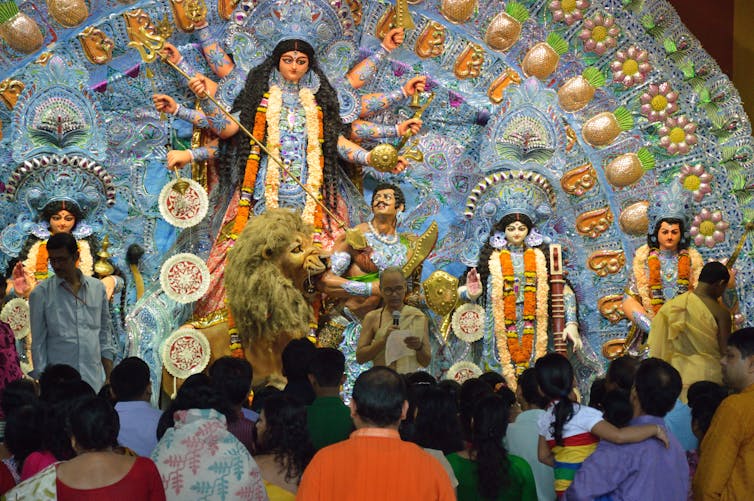
Biswarup Ganguly/wikipediaCC BY-SA
According to this article by a psychologist, many facets of the human psyche, from our concept of  motherhood to the delusions we may suffer, are affected by the culture in which we have been immersed. The article does a quick swoop over the discipline of psychology, illustrating with evidence how Western bias (and the preponderance of under-graduates as experimental subjects) may have skewed our conclusions. 

Sunday, 7 October 2018

What can History teach us?

The failure of Google Glass to become a raging success is mirrored by the difficulty other technologies had in being adopted, for example the dining fork. Britain was relatively quick with the umbrella (I wonder why?).

The podcast The Secret History of the Future looks at how the long story of technology has lessons to teach us: the first cyber attack was in the nineteenth century according to the podcast. Episodes of the podcast look at automata and driverless cars and demonstrate the long lineage of these ideas. Can we foretell the future by studying the past? Are there lessons from History which can illuminate present issues? Does history repeat itself or are we too ready to seek patterns in chaos?


Saturday, 6 October 2018

Sometimes the audience is the work

Banksy, the graffiti artist, sold a self-destroying painting which had sold for 1 million pounds. The article speculates that its value thereby doubled. The headline calls it a prank, but was it, in fact, Art? The painting participated in an event which evoked varied responses from viewers. Can the public's reaction be part of the artwork?


Thursday, 4 October 2018

A font which helps you learn!

According to its designers, Sans Forgetica has been created to improve retention of the information written in it. They claim that it is difficult to read in a way that makes the knowledge stick. Can the way in which information is taken in through sensory channels affect the way in which we process it? For the best chance of recalling later the details of the work, read the passage below.


Saturday, 25 August 2018

Is tourism a good way to know another culture?

According to this article in the Guardian, some UK tourist attractions are now advertising themselves on Chinese social media. Busloads of tourists visit this Yorkshire fish and chip shop. Their expectations have been changed by TV programmes such as Sherlock and Downton Abbey. Are the visitors now experiencing a more authentic version of the UK?

Is cuisine or entertainment an Indigenous Knowledge System?

Wednesday, 13 September 2017

Can you measure creativity?

This article in the Guardian describes an experiment which tries to demonstrate the effect of listening to music on creativity. We had interesting discussions about the design of the experiment and whether the methods of science are appropriate to investigating human qualities.

Sunday, 9 July 2017

Colour and emotion - is it a science?

How does something as basic as the wavelength of radiation affect how we feel about things? This documentary talks about the use of colours to evoke emotions without once mentioning Art. The language used is very interesting, as is the certainty with which they describe their principles. The glasses which reverse colour blindness are very cool.

Color In Sight: A Documentary on the Details of Color in Design by TEALEAVES from Tealeaves on Vimeo.

Wednesday, 29 March 2017

What does a musical performer do?

What is the relationship between a composer and a performer? How important is interpretation? How do musicians from different cultures manage to work together? What if the composer dislikes the interpretation?

This podcast explores the arts, interpretations and music from different cultures

Sunday, 26 March 2017

Emotions vary from culture to culture


In this article, the writer argues that the classical view, from Descartes to Pinker isn't supported by the scientific evidence. We learn our emotions and different people experience them differently.


https://www.theguardian.com/lifeandstyle/2017/mar/26/why-our-emotions-are-cultural-not-hardwired-at-birth

Monday, 13 March 2017

Is "learning styles" a neuromyth?

Many teachers and students feel intuitively that the theory of 'preferred learning styles' reflects their experience of teaching and learning. But according to many experts in neuroscience, there is little evidence to support it as an effective teaching practice. In a letter to the Guardian, 30 experts warned against belief in this practice.
Primary classroom


https://www.theguardian.com/education/2017/mar/12/no-evidence-to-back-idea-of-learning-styles

Saturday, 11 March 2017

Versions of English spoken in England

In this Guardian article, there are some great examples here of adaptations of the English language. Some argue that some dialects are superior to others.

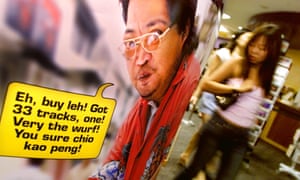
A poster in Singapore advertising a comedy album in Singlish. It roughly translates as ”buy our CD, it’s very worthwhile and will make you laugh till you fall over”

Saturday, 4 March 2017

What is original?


After watching Part 1 of Everything is a Remix, my class and I had an interesting discussion about influence and appropriation in art. The examples it uses start with music: Led Zeppelin and hip hop, both of which the class had some knowledge of. When you ask the same questions about the visual arts, it becomes hard to define originality.

An art teacher who was visiting the class brought up the work of Marcel Duchamp and the Mona Lisa postcards he defaced. The more you know about it, the more original the concept becomes.